Seven Stage — Building sequences and journeys

- Role:
- Concept, interaction design and prototyping
- Client Practice:
- emgrafica studio research
- Period:
- August 2026
- Discipline:
- Game mechanics and journey visualisation
- Sector:
- Creative technology
- Capabilities:
- Interaction design, Journey mapping, Game design, Creative coding
- Project:
- A browser game with seven-stage paths, object choices and shared-board progression; further journey-authoring features are planned.
The work
I designed Seven Stage to explore how a journey can be built from a sequence of choices. Five players share a start and an end, while each follows a distinct route through five playable phases. Objects placed along those routes make progress visible and give the completed journeys something to compare.
The isometric board turns an abstract sequence into a place: connections show where a player can go, stage states show what is available, and each selected object becomes part of a visible history.
The seven stages are Start, five decision phases and End. Each player begins with their first phase available. Dragging an object from that player’s menu onto the highlighted stage completes one choice and unlocks the next. A future phase or another player’s route cannot accept that move.
All five players are represented on the same board. This release is a shared-device browser prototype; the word “network” describes the graph of connections, rather than online multiplayer.
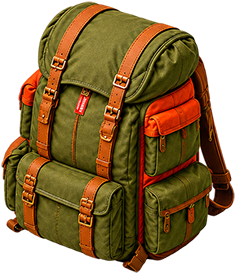
The object menu contains a laptop, football, coffee, book, rucksack and photo frame. Each has a fixed rating and power value. A placement records the player, phase, object, rating, power and time. The selected object stays associated with that phase; completed choices cannot be overwritten through the normal game interaction.
I use these demonstration values to make the mechanics visible and give players something concrete to compare.
The graph version represents playable places as nodes and legal connections as edges. Rendering coordinates sit alongside that structure, allowing the rules of progression to be described independently from the positions drawn on screen. Five routes connect the shared endpoints through 25 playable nodes.
The current game still uses authored routes. Free-form graph editing, new branches, configurable phases and arbitrary journey design are possible development directions; they are not controls provided by this release.
Once all 25 choices are complete, the Resolve Game control reveals the results. Players are ranked by the sum of their selected objects’ power values, and equal highest scores are shown as joint winners. The end-game readout preserves the phase-by-phase choices alongside each total.
A CSV export carries the move history and player totals into further review. Print / Save PDF opens the browser’s print workflow. Reset clears the current game so a new set of journeys can be played.
A continuing visual practice
I wanted a shared board to make individual choices visible alongside other journeys. The sequence gives each decision a place and shows how progress develops over time.
Objects become prompts for discussion about what a journey needs, while progression and scoring provide a structure for comparing the choices made.
Shared journeys 4.0 · Player profiles · Skills, resources and objective rounds.

Selected Works










Contact the studio.
Gaillimh
Éire
studio@emgrafica.com