TISO Canvas — Objects, stories and extensions of man

- Role:
- Concept, visual language and application design
- Client Practice:
- emgrafica studio research
- Period:
- Ongoing studio research
- Discipline:
- Visual communication and creative systems
- Sector:
- Creative technology
- Capabilities:
- Visual communication, Creative coding, Semantic systems, Digital asset design
- Project:
- Studio-authored visual framework, Canvas prototypes and semantic research. Image generation, blockchain minting and OpenSea integration are development aims.
The work
I think of a collection of objects as a language. With TISO Canvas, I bring visual assets into a spatial environment where their arrangement can tell stories about human ingenuity, everyday life and the apparatuses we build to extend ourselves.
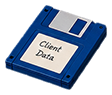
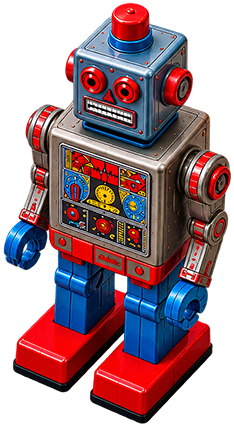
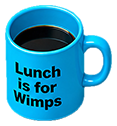
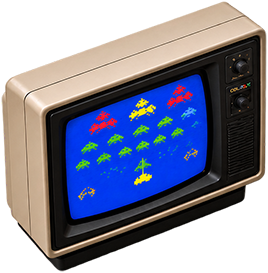
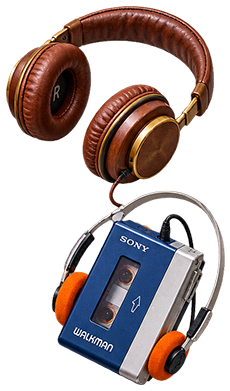
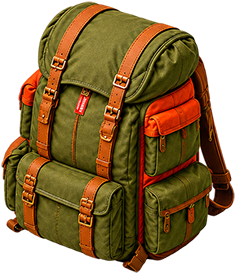
TISO — Technicolor Isometric Object Style — gives those objects a shared visual world: rich colour, physically convincing materials, precise isometric geometry and isolated forms. The Canvas develops that language into a place for collecting, comparing and composing images. A tool can be understood through its appearance, its function, the setting in which it is used and the associations it carries.
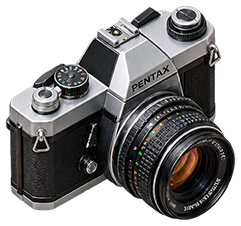
A telescope extends sight. A camera preserves a moment beyond memory. A musical instrument gives the body another means of expression. A printing press multiplies the reach of a voice. Across mechanical-age apparatuses and later electronic tools, the collection explores how designed objects extend human strength, perception, communication and imagination.
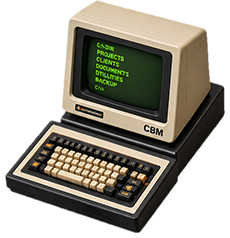
These objects also carry cultural and personal meaning. A desk of pre-digital office equipment can evoke an idea of productivity; a group of recording devices can connect performance, listening and memory. The same object can participate in several stories. Its place in a collection need not exhaust what it means.
I conceived the Canvas as a working surface for visual communication. Objects can be brought into proximity, separated or collected into compositions. Their relationships become material for a narrative: an account of a practice, a technological transition, a workspace or a remembered scene.
Master collections preserve the original relationship between an image and its source group. Semantic research adds another layer, exploring connections across those groups. A tennis racket, for example, can be sporting equipment, an instrument of play and an extension of the arm. These readings can coexist; an inferred association does not replace the artist's original grouping or interpretation.
I keep source integrity central to the work. The 3B Recognition/Recovery — No New Generation method extracts existing artwork from a Master without regenerating or reinterpreting it. Asset identifiers and Master relationships retain that lineage. Genuine transparency preserves contours, semitransparent materials and delicate shadows so an object can belong in a new composition without carrying an unwanted background.
The established project context describes 52 Master groups. Subsequent semantic research considers both what can be observed in those images and what the author says they mean. Literal observations, provisional interpretations and author-provided meaning remain distinct.
My next ambition is for the Canvas to process a visual reference or a declared set of image-making parameters. Rather than producing an isolated result with no account of its making, an output would travel with its source, selected characteristics, process settings and review history.
The interactive printing machine is intended to make this process tangible. A historical manufacturing apparatus becomes an interface for digital production: receive a reference, compose or generate a TISO image, inspect it and retain a record of how it was made. This extends the project from arranging existing assets towards a Digital Asset Manufacturing System.
In a future release, I intend to connect reviewed outputs with blockchain minting through a service such as Crossmint. The image and its descriptive record would be prepared before minting, with a clear relationship between the finished work, its declared parameters and its token record. The exact division between onchain records and externally stored media remains a design decision.
OpenSea integration is a further development aim: connect the work to a user's chosen wallet and make the resulting asset accessible through their collection. Minting, wallet interaction and marketplace presentation are separate stages. I am developing these integrations as future extensions of the Canvas prototype.
TISO Canvas brings together collecting, visual storytelling and the design of tools for making images. Its repository of physical objects is also a repository of human intentions: the things we have engineered to measure, remember, communicate, work and play. My long-term aim is a creative environment in which an image can be experienced as a form, understood through its relationships and traced through the process that produced it.
A continuing visual practice
I find that arranging a collection changes the way its objects can be read. Spatial relationships allow tools, memories and associations to become part of the same composition.
The Canvas gives those relationships a practical form through navigation, grouping and saved Worldviews.
Canvas V69 · Desktop-oriented prototype · Opens in a new tab.

Selected Works






Contact the studio.
Gaillimh
Éire
studio@emgrafica.com